

Te Rangakura partnerships for research and data

Te Whare o te reo Mauriora is the framework to guide how Māori and the Crown work towards he reo mauriora, towards a healthy te reo Māori.  

Te Mātātupu represents Te Mātāwai and plays an active role at Te Rangakura, which was established under Te Whare o te Reo Mauriora. Te Mātāwai acts on behalf of Māori in the collective research forum. Te Rangakura is a collaborative research agenda group that ensures practical cooperation and information sharing between government agencies with responsibilities related to te reo Māori and Te Mātāwai.

Our partners of Te Rangakura are: Te Puni Kōkiri, Te Taura Whiri i te Reo Māori, Ministry of Education, Statistics New Zealand, Ministry of Culture and Heritage, Whakaata Māori and Te Māngai Pāho.  

Te Mātāwai also holds a leadership role in the collection and use of te reo Māori data.

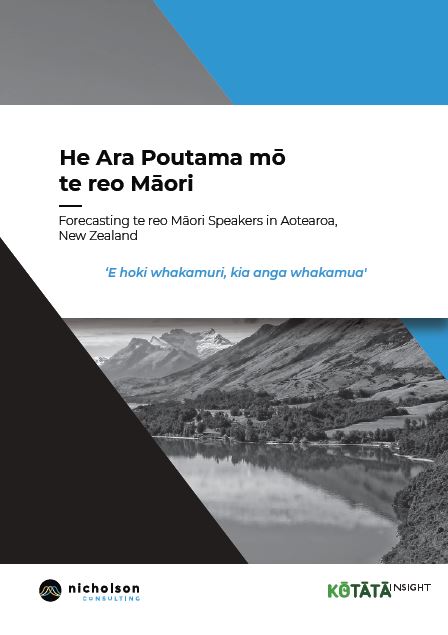
He Ara Poutama mō te reo Māori

He Ara Poutama mō te reo Māori is an award-winning microsimulation model of te reo Māori fluency and usage in Aotearoa. It was commissioned by Te Rangakura, and built by a collaborative working group from Nicholson Consulting and Kōtātā Insight - 
Its purpose is to forecast the number of te reo Māori speakers in Aotearoa New Zealand up to the year 2040, helping to support planning, investment, and decision-making in te reo Māori revitalisation, particularly in Te Whare o Te Reo Mauriora.

He Ara Poutama mō te Reo Māori focuses on how the population flows through different life stages and events, and the impact of these on uptake of and fluency in te reo Māori. It is the first model of its kind in the world due to the individual statistical data collection of Aotearoa.

The way this microsimulation model works is by looking at a person’s traits (which include their whānau and communities) and using information about how other people with the same or similar traits have changed their ability to speak te reo Māori.

The summary report is divided into four sections; the current number of fluent and conversational speakers, proportion of Māori language speakers by local area, impacts of acquiring te reo Māori and a pathway forward.

He Ara Poutama mō te reo Māori allows us to understand more about who the speakers of te reo Māori are – how old they are, if they are Māori and where they live. The tool currently has three levers that can be pulled and manoeuvred to create projections for conversational and fluent Māori language speakers. The three levers of the tool are tamariki Māori in Māori medium education, whānau involvement in community immersion initiatives and tamariki learning te reo Māori in mainstream education.