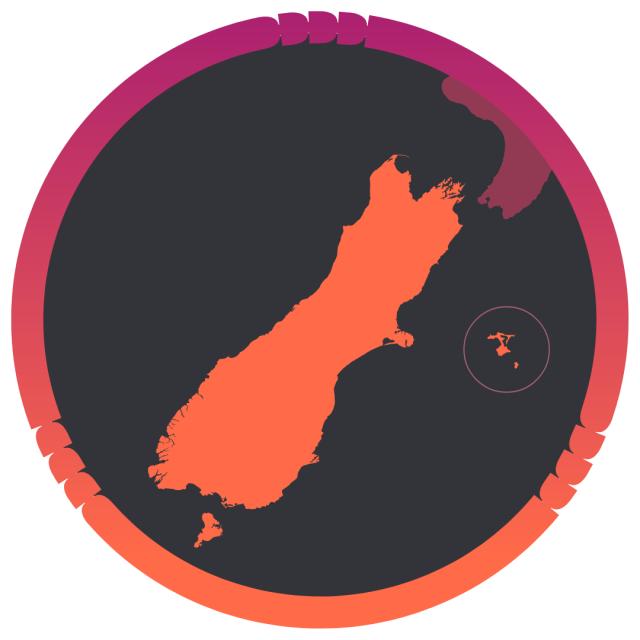


Investment criteria, plans and priorities are set by the eight kāhui and contribute towards achieving our priority outcomes:

  1. Tukuihotanga – Deliberate intergenerational transmission
  2. Hononga Hapori Reo – Connected language speaker communities

These outcomes will be driven by:

  • Mana Motuhake – Authority
  • Toitūtanga – Sustainability & Continuity

Pae Motuhake, representing iwi and Māori interests, develop the investment plan and priorities for each kāhui, making recommendations to the Board of Te Mātāwai to approve applications in their kāhui. 

For more information on our priorities, refer to our Statement of Intent 2024-2027.

View approved funded projects 2026-2027

What cannot be supported by Te Mātāwai

Outlined is what is outside the scope of our investment funding:

  • Activities that do not relate to te reo revitalisation
  • Activities where Te Reo Māori is the secondary vehicle for another project
  • Activities that do not align with the Kāhui Annual Investment Plan
  • Any activity that has been fully funded or is currently in receipt of full funding
  • Capital items such as buildings, vehicles, laptops, phones, cameras, etc. (items that can be on-sold for profit)
  • Any expenditure or costs incurred before the Te Mātāwai funding agreement is signed
  • Projects that are, or should be, funded by other sources (eg. Te Māngai Pāho, Te Puni Kōkiri, Ministry of Education, etc.)
  • Merchandise
  • Existing debts
  • Legal costs
  • International travel
  • Subscriptions
  • Full Time Employment
  • Property rent (e.g. office space, house, etc.).

What you need to know about Kāhui Application Criteria and Investment Plans

When applying for investment funds, your application needs to align to the kāhui criteria and investment plan you want to apply for.

  • Read and understand the chosen kāhui application criteria.
  • Read and review the investment plan according to the kāhui you wish to deliver your kaupapa in.
  • If your audience is iwi-based, Kāhui ā-Iwi is your go-to.
  • If your audience is sector-based (te rāngai hapori, te hunga noho tāone, te rāngai mātauranga, te rāngai pāpāho), familiarise yourself with Te Kāhui o Te Reo Tukutuku.
  • You understand all the contractual requirements expected of you if funded.

Application criteria and investment plans are set out by the eight kāhui. Note that criteria differ from kāhui to kāhui and from time to time could change.

Read the full investment criteria of each Kāhui below:

Te Pae Motuhake o Te Tai Tokerau:

  • Only invest in activities delivered within, and by those who reside in Te Kāhui o Te Tai Tokerau.
  • Do not fund travel costs for kaiako, key personnel or participants who live outside of the Kāhui.

Kaitono:

  • Must provide a business case for requests of $99,000 or more.
  • Must provide Te Mātāwai with a copy of any resource funded through Pae investment.

Te Pae Motuhake o Tainui:

  • Only invest in activities delivered within Te Kāhui o Tainui.

Kaitono:

  • Must provide a business case for requests of $60,000 or more.

Te Pae Motuhake o Mātaatua:

  • Only invest in activities delivered within Te Kāhui o Mātaatua.
  • Consider applications for iwi and marae only when submitted by their registered entity (not by individuals applying on their behalf).
  • Do not invest in kapa haka initiatives. If you are running waiata practices, you must indicate that they are for whānau.

Kaitono:

  • Must whakapapa to iwi of Te Kāhui o Mātaatua.
  • Must ensure applications for Te Kura Nui and Te Kura Roa (see Investment Plan) align with a current 5-year iwi, hapū, marae or whānau language plan or strategy.

Te Pae Motuhake o Te Arawa:

  • Prioritise investment in activities delivered within Te Kāhui o Te Arawa.
  • May consider applications from uri living outside of the Kāhui, if the activity benefits Te Arawa uri.
  • Only invest in projects up to $100,000.
  • Require all in-kind contributions to be outlined in the budget section of your application.

Kaitono:

  • Must provide a business case for requests of $80,000 or more.
  • Must submit their application in te reo Māori.
  • Must declare all key personnel, outline their involvement and provide a letter of endorsement.
  • Must provide a letter of endorsement from their hapū, marae, or iwi.

Te Pae Motuhake o Te Tai Rāwhiti:

  • Only invest in activities delivered within, and by those who reside in Te Kāhui o Te Tai Rāwhiti.
  • Only invest in projects up to $100,000.
  • Encourage Kaitono to submit one application only, unless also applying for Kura Reo.
  • Do not invest in resource development (except activity workbooks).
  • Prioritise projects that will increase the use of te reo in Te Tai Rāwhiti homes and communities.

Kaitono:

  • Must demonstrate how their application aligns to a current iwi language plan or strategy.
  • Must submit a separate application when applying for both a Kura Reo and another activity.

Te Pae Motuhake o Te Tai Hau-ā-uru:

  • Only invest in activities delivered within, and by those who reside in Te Kāhui o Te Tai Hau-ā-uru.
  • Prioritise investment in activites that align to the following investment priorities: Mārama Pū, Whāinga Roa, Tuku Ihotanga.

Kaitono

  • Must provide a business case for requests of $100,000 or more.

Te Pae Motuhake o Te Tai Tonga:

  • Only invest in activities delivered within Te Kāhui o Te Tai Tonga.
  • Support the travel costs for kaiako and key personnel who live outside of the Kāhui, but not for whānau or tauira who live outside of the Kāhui.
  • Do not invest in merchandise, or resource/service development intended for commercial purposes.

Kaitono:

  • Must provide a business case for requests of $100,000 or more.
  • Must provide a letter of endorsement from the hapū, marae, iwi, or imi.

Te Pae Motuhake o Te Reo Tukutuku:

  • Prioritise applications connected to a legacy group.
  • Advise Kaitono not to apply for the same activity in another Kāhui.

Kaitono:

  • Must provide a business case for requests of $95,000 or more.
  • Must provide a letter of endorsement from all key personnel.
  • Must provide written confirmation from the original publisher when translating an already-publihsed resource, e.g. confirming IP content and publishing rights.

Legacy groups are listed in Schedule 4 of Te Ture mō Te Reo Māori 2016.